
Tesamorelin and Ipamorelin Growth Hormone Peptides in Southlake, TX
Tesamorelin and Ipamorelin are GHRH peptides that prompt your body to release its own growth hormone. Both are given as small subcutaneous injections under medical supervision.
- Google 4.8★
- Yelp 5.0★
Two growth-hormone peptides, one signal
Tesamorelin and Ipamorelin are two of the GHRH peptides Dr. Mikki prescribes. Tesamorelin is FDA-approved for reducing excess abdominal fat and used off-label for body composition, and Ipamorelin triggers a clean growth-hormone pulse. Together, they support your body’s natural growth-hormone signaling with a focus on recovery, energy, and overall vitality.
What each peptide does
The two are prescribed together because each reaches growth hormone by a different route, and Dr. Mikki decides how they are dosed against your labs.
How the two peptides differ
Tesamorelin is a GHRH analog aimed at visceral fat, and Ipamorelin is a secretagogue that amplifies the pulse. For a longer-acting schedule, Dr. Mikki may instead pair Ipamorelin with CJC-1295. She decides the fit at consultation.
| Feature | Tesamorelin | Ipamorelin |
|---|---|---|
| Acts as a GHRH analog | Included | Not included |
| Acts as a growth-hormone secretagogue | Not included | Included |
| Studied specifically for visceral (abdominal) fat | Included | Varies |
| Prompts your own growth-hormone release | Included | Included |
What the pairing is used for
Most patients arrive describing one of these six and discover the others along the way. They are what restored growth-hormone signalling is reported to support, not a promise about your own body, and individual results vary.
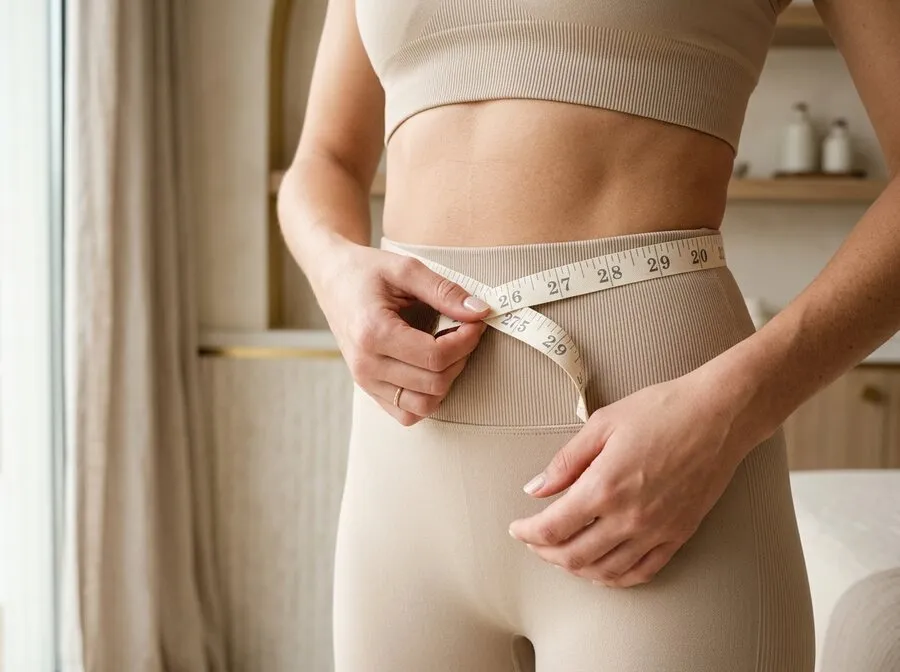
Visceral belly fat reduction
The deep abdominal fat stored around the organs is the target, not surface weight. A reduced waist circumference and improved metabolic markers are reported alongside it.

Lean muscle and strength
The pairing is described as stimulating muscle protein synthesis and improving definition, which is why it is framed as body recomposition instead of weight loss.

Sleep quality and recovery
Deeper, more restorative sleep and faster tissue repair are among the first changes patients report, which fits a therapy timed to the body's own nightly release.
Skin quality
Increased collagen and elastin, firmer skin and reduced fine lines are the anti-aging effects attributed to restored growth-hormone signalling.

Mental clarity
Improved focus, memory and mood, with less brain fog. Cognitive change is reported later than sleep or energy, which the expectations timeline below reflects.

Metabolic support and energy
An increased basal metabolic rate, better glucose metabolism and more sustained energy through the day. Results vary with age, sleep and activity.
Why choose a GHRH peptide
Growth hormone replacement adds the hormone from outside. A GHRH peptide asks your own pituitary for it instead, and the difference between those two approaches is the reason Dr. Mikki works with peptides here.
What treatment looks like
Comprehensive initial consultation
A full medical history, a physical exam and a body composition analysis. This is where Dr. Mikki decides whether a GHRH peptide is the right tool for what you are actually describing.
Baseline lab testing
A metabolic panel, lipid profile, glucose and HbA1c, IGF-1, thyroid function and a CBC. IGF-1 in particular is the marker that says what your growth-hormone axis is doing before anything starts.
A plan built for you
Dr. Mikki sets your treatment plan and your schedule against those labs and your goals, including whether Tesamorelin and Ipamorelin together are the right pairing, or whether another GHRH peptide fits better.
Self-administration, taught first
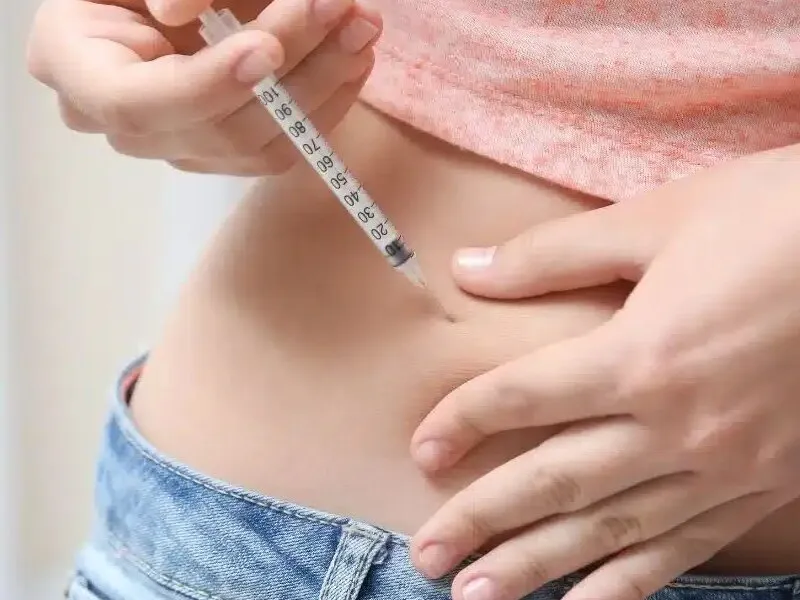
The peptides are given as small subcutaneous injections you administer yourself. You are shown how in person, not left with a leaflet.
Monitoring at four, eight and twelve weeks
Scheduled reviews at each of those points check how you are responding and adjust the dose. Nutrition and resistance training run alongside it, because results are reported to be markedly better when they do.
Safety and side effects
Why the pairing is considered safe
- Tesamorelin is FDA-approved for reducing excess abdominal fat, the approval originally granted for HIV-associated lipodystrophy.
- It works through your body's own regulatory systems, so the normal physiological feedback loops that limit release stay intact.
- Both peptides have been studied extensively, and Ipamorelin is selective enough to leave cortisol and prolactin largely alone.
- Dr. Mikki screens with a full history, a physical exam and lab work before anything is prescribed.
- You are reviewed at four, eight and twelve weeks, so anything unexpected is caught while it is small.
What to weigh honestly
- That FDA approval covers Tesamorelin only. Its use for general body composition and anti-aging is off-label, and Ipamorelin is not covered by it at all.
- Side effects are described as mild and rare, not absent. Report anything you notice instead of waiting for the next review.
- Diabetes requires special monitoring on GHRH therapy. Say so at consultation if you have it.
- This is a gradual therapy. Sleep and energy move first and body composition takes months.
- Cost varies with your plan and its duration, so ask for a written quote at consultation instead of working from a range.
Who these peptides are for
Dr. Mikki confirms candidacy at consultation against your labs and your history, and will say when a different peptide fits better: Sermorelin as a first-line GHRH option, CJC-1295 where a longer-acting schedule suits you better, or the wider GHRH peptides group where the goal is recovery rather than abdominal fat.
A good fit
- Adults carrying stubborn visceral fat that diet and exercise have not shifted.
- People over 35 noticing age-related decline in body composition, recovery or sleep.
- Athletes and fitness enthusiasts working on recovery and body recomposition.
- Patients with diagnosed growth hormone deficiency.
- Women, including perimenopausal and menopausal patients, for whom the pairing is reported to work well.
Not the right treatment
- Anyone with active cancer.
- Pregnancy or breastfeeding.
- Uncontrolled diabetes.
- Certain pituitary conditions, or active proliferative retinopathy.
- Anyone under 18.
Before you book, three things worth knowing
Tesamorelin is FDA-approved for reducing excess abdominal fat; using it for general body composition is off-label, and Ipamorelin is not covered by that approval at all. This is months-long therapy, not a short course. An initial cycle runs three to six months, and resistance training alongside it makes a real difference to what you get from it. And cost varies with your plan and its duration, so ask for a written quote at consultation. Results vary based on individual factors.
What to expect, and how long it takes
Clinical studies show Tesamorelin can reduce visceral fat by 15-20% over several months. Results vary based on individual factors, and the order below matters as much as the timing: sleep and energy move well before body composition does.
Weeks 1–4
Sleep, then energy, then recovery
Improved sleep is usually the first change, at one to two weeks. Energy follows at two to four weeks and recovery at three to four. None of this is the scale moving yet.
Weeks 4–6
Mood and cognition
Clearer focus, better memory and a lift in mood are reported in this window. They arrive later than sleep because they follow from it instead of arriving alongside it.
Weeks 8–16
Body composition changes
Visible body composition change is reported from eight to twelve weeks, with significant visceral fat loss and muscle gain from twelve to sixteen. This is the window in which the real work shows up.
Months 4–6
Optimal results and what next
Optimal results are described at four to six months, which is why an initial cycle runs three to six months. Many patients continue long-term; that decision is made with Dr. Mikki, not by default.
Why patients choose supervised GHRH therapy
These reflect common patient sentiment rather than verbatim quotes, and individual results vary.
I wanted help with stubborn abdominal weight and better sleep, and I had read conflicting things about growth-hormone peptides. Dr. Mikki explained the treatment in a way that made sense, walked me through what to expect, and checked labs first.
Dr. Mikki set a realistic timeline and adjusted the dose once we saw how I responded. No overpromising.

Frequently asked questions
What are Tesamorelin and Ipamorelin?
Both are growth-hormone peptides. Tesamorelin is a GHRH analog studied for reducing visceral (abdominal) fat by prompting the body's own growth-hormone release. Ipamorelin is a selective secretagogue that triggers a clean GH pulse. Dr. Mikki prescribes them together under medical supervision.
Is Tesamorelin FDA-approved, and is Ipamorelin?
Tesamorelin is FDA-approved for reducing excess abdominal fat, an approval originally granted for HIV-associated lipodystrophy, and it is used off-label for body composition optimization and anti-aging. That approval covers Tesamorelin only. Ipamorelin is not covered by it and, like most peptides, is prescribed off-label under physician supervision.
Why are Tesamorelin and Ipamorelin used together?
They act on growth hormone through two different receptors. Tesamorelin binds GHRH receptors in the pituitary while Ipamorelin stimulates ghrelin receptors, so pairing them reinforces the same signal from two directions. The dual-action approach mimics your natural growth-hormone pulses, and Ipamorelin does it with minimal impact on cortisol or prolactin.
How does Tesamorelin target belly fat, and what do studies show?
Tesamorelin specifically targets visceral adipose tissue, the fat stored around the internal organs, by stimulating natural growth hormone release. That promotes lipolysis in abdominal fat stores while preserving lean muscle mass. Clinical studies show Tesamorelin can reduce visceral fat by 15-20% over several months, and results vary based on individual factors.
What is the difference from taking growth hormone directly?
Growth hormone replacement adds the hormone from outside. Tesamorelin and Ipamorelin instead prompt your own pituitary to release it in a natural pulse, which keeps your normal physiological feedback loops intact and reduces the risk of excess. That is a different mechanism, and it is one reason candidacy and monitoring are decided by a physician, not self-directed.
How are they given, and how often?
Both are given as small subcutaneous injections you administer yourself, often in the evening to match the body's natural release. Dr. Mikki sets your dose and schedule at consultation based on your goals, your labs, and how you respond, and shows you the technique in person.
When will I notice results, and where do the peptides come from?
This is a gradual therapy, and there are no shortcuts. Improved sleep is usually reported first at one to two weeks, energy at two to four, visible body composition change from eight to twelve weeks, and optimal results at four to six months. Results may vary with age, sleep, and activity. Every peptide is sourced from reputable compounding pharmacies, and Dr. Mikki, a board-certified MD, sets the plan and monitors you.
Can Tesamorelin be combined with hormone therapy or other treatments?
Yes. Tesamorelin often complements hormone replacement therapy programs, and Dr. Mikki creates integrated treatment plans that may include testosterone optimization, thyroid support, or other hormone therapies based on comprehensive lab evaluation. Nutritional guidance and structured resistance training run alongside the peptides, and results are reported to be markedly better when they do.
Am I a candidate for Tesamorelin or Ipamorelin?
Candidacy is decided at consultation. Dr. Mikki reviews your goals, relevant labs, and history before recommending a GHRH protocol, and she will say plainly when these peptides are not the right tool for you. They are not prescribed to patients with active cancer, uncontrolled diabetes, certain pituitary conditions or active proliferative retinopathy, to anyone pregnant or breastfeeding, or to anyone under 18.
Is a GHRH peptide right for you?
Dr. Mikki reviews your goals and labs, decides whether Tesamorelin, Ipamorelin, or another GHRH peptide fits, and sets your dose before you begin.
4.8★ from 128 verified Google reviews