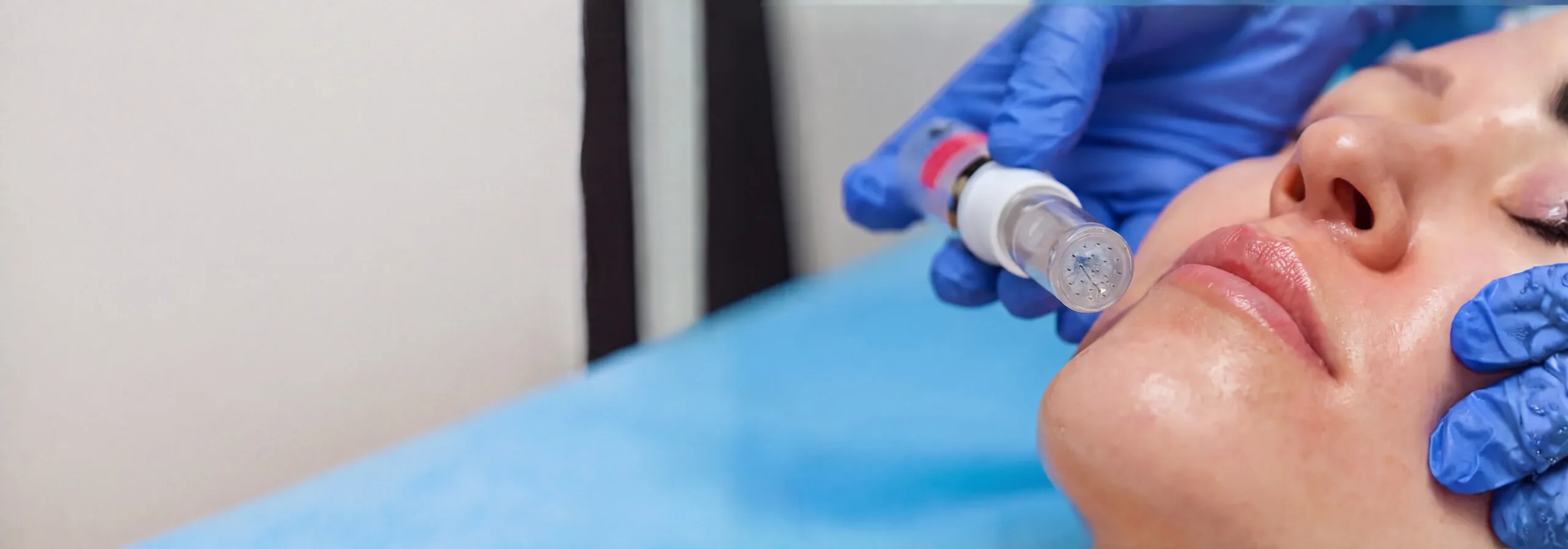
Microneedling with SkinPen, PRP/PRF, or RF in Southlake, TX
Fine needles make tiny channels in the skin, and your body answers by building collagen. We run it three ways in Southlake, TX, and pick the one your skin needs.
- Google 4.8★
- Yelp 5.0★
The three kinds of microneedling we offer
All three use the same needles. What changes is what goes in with them: nothing at all with SkinPen, your own platelets with PRP/PRF, or heat with radiofrequency. If dullness is the concern, start with facials.
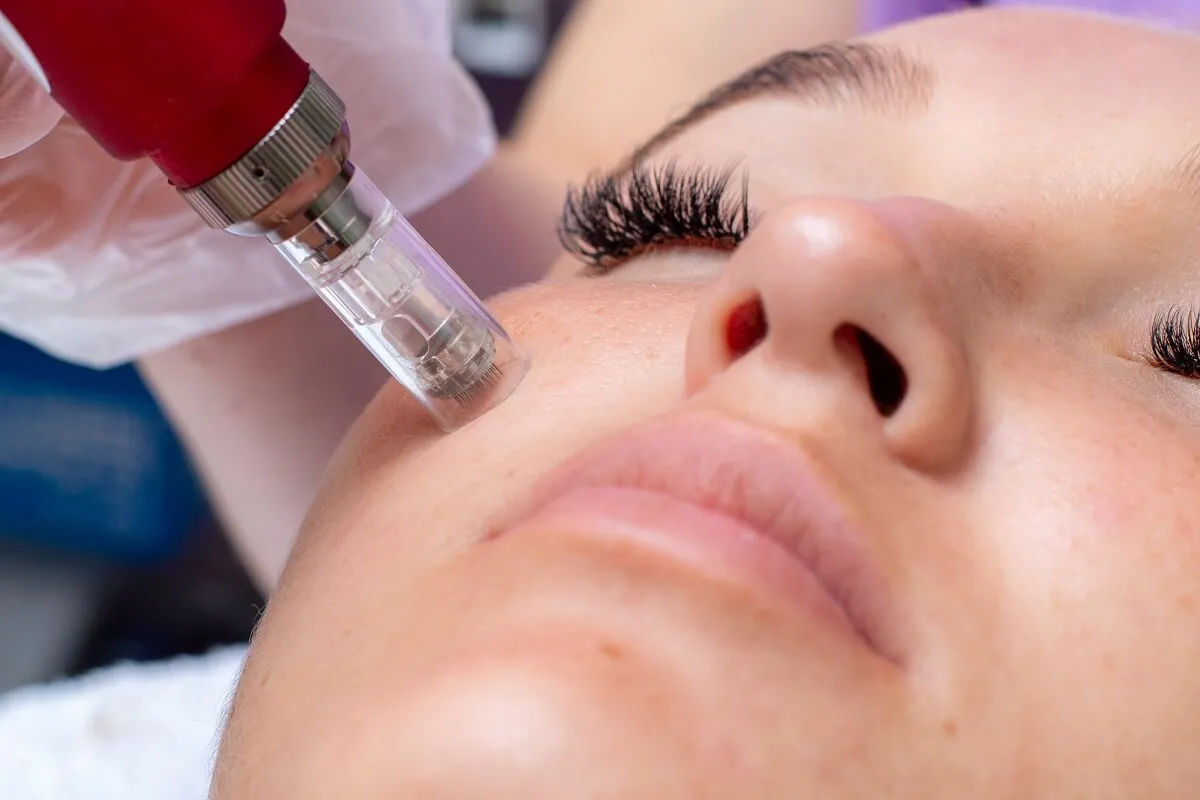
Microneedling with SkinPen
Fine needles alone, on the SkinPen device. The tiny channels they make prompt your skin to build new collagen. Nothing is added — no platelets, no radiofrequency.
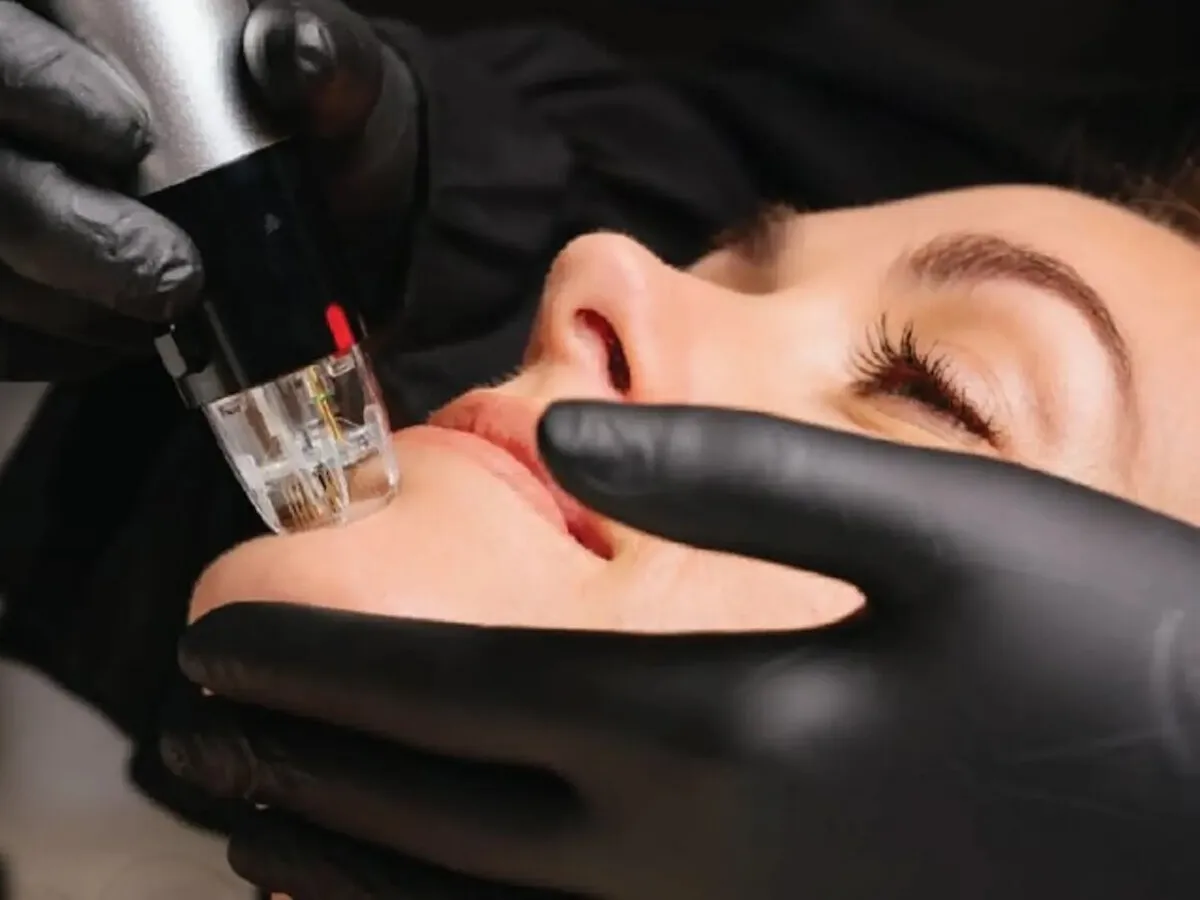
RF Microneedling
The same needles, plus heat. The Lutronic Genius platform sends radiofrequency energy out of the needle tips, so it reaches deeper and works on loose skin, not just texture.
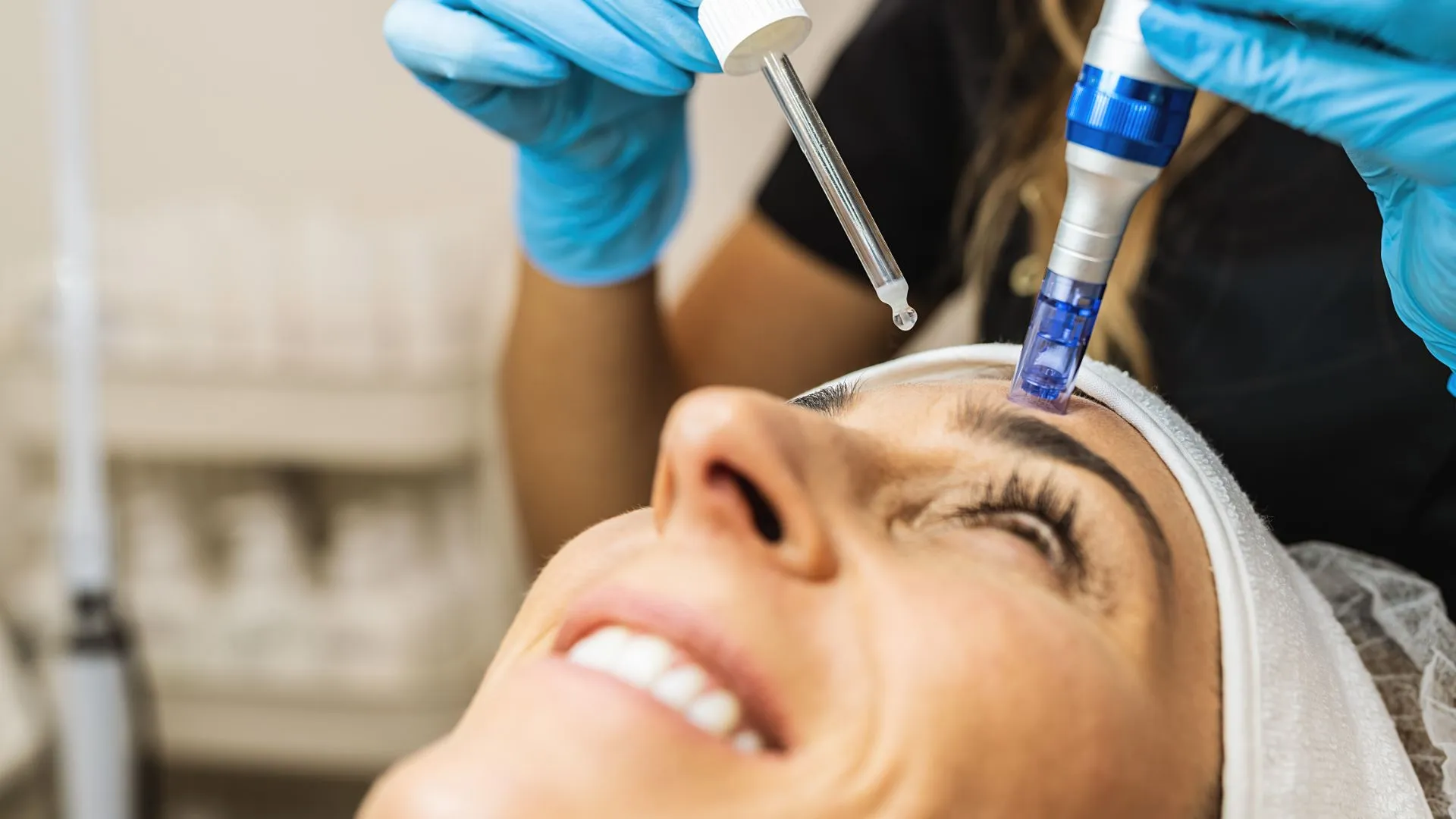
Microneedling with PRP/PRF
We draw a small amount of your blood, spin out the platelets, and work them into the skin as we needle. Your own growth factors do the repairing.
Collagen induction therapy, in plain terms
Microneedling is also called collagen induction therapy, and the second name is the more honest one. A device fitted with fine, sterile needles makes microscopic punctures in the skin. Those controlled micro-injuries switch on your body's own healing response, and building collagen and elastin is part of that response. Nothing is added to your face to create the change — your skin makes it.
What microneedling is used for
One mechanism, six concerns it is asked for. Which of the three treatments above you need depends on which of these brought you in, and how deep it sits. Scalp work is the seventh — microneedling the scalp is part of our hair restoration work rather than a facial treatment.
How our microneedling helps your skin
The mechanism is the same wherever microneedling is done. What changes from one clinic to the next is the device, how its depth is set, and how much skin one pass covers — and those are the parts you actually feel.
-
The needles go in straight
The pen holds a sterile cartridge and drives its needles vertically, so every channel is the same depth as the one beside it. That is what separates a powered pen from a roller dragged across the skin at an angle.
-
Depth is set for the area
Skin around the eyes is not as thick as a cheek or a forehead. The depth is set for the area being treated rather than once for the whole face.
-
An area is covered in one pass
Each cartridge carries a cluster of needles and oscillates as it moves, so hundreds of microchannels are made across an area in a single pass. That is why a face is a short appointment.
-
There is very little to see afterwards
The punctures are microscopic and close over quickly. What shows is redness rather than the individual marks, and how long that lasts is set out in the timeline below.
-
Every session runs in the Southlake, TX clinic
The treatment is done in our own rooms, on the same equipment each visit, so a depth and a combination that suited your skin last time can be repeated at the next one.
Downtime after microneedling, week by week
Downtime is short and the result is slow, which is the opposite of what most people expect. Here is the honest order of it.
The first 24 hours
Your skin looks and feels like a mild sunburn: warm, pink and a little tight. Most patients are back to normal activities inside a day.
Days one to three
Redness, mild swelling and sensitivity are at their most visible and then start to fade. This is the whole of the downtime for most people, and it runs longer after PRP/PRF or RF.
About a week
The skin has finished its surface recovery. Anything you notice at this point is early — the smoother texture that shows in the first days or weeks is the healing, not the finished result.
Four to six weeks
This is when the collagen your skin built in response to the needling actually shows. Results may vary, and it is also the interval before the next session in a course.
What microneedling can do for your skin and what it can't
Microneedling builds collagen. It will not tighten skin once laxity moves past mild-to-moderate, and that is the point at which Dr. Mikki recommends EndoTight instead.
| Feature | Medrein | One-Size Menu |
|---|---|---|
| Needle depth set to your skin, not a standard setting | Included | Not included |
| PRP/PRF or RF added only when your skin calls for it | Included | Varies |
| A next step named when needles alone will not be enough | Included | Not included |
| Your skin examined before the first session | Included | Varies |
Why patients trust the recommendation, not just the needles
These reflect common patient sentiment rather than verbatim quotes, and individual results vary.
I'd tried an at-home derma roller for a year with nothing to show for it, so I was skeptical walking in. Dr. Mikki explained why the needle depth and the PRP made a difference, checked my skin first, and matched me to the right one instead of just running me through whatever was on the menu that week. Results may vary, but the texture change after three sessions is the first time I've actually seen it work.
A real explanation of which treatment fit my skin, not just "let’s add PRP for more money."

Frequently asked questions
What is microneedling, and how does it actually work?
A device fitted with fine, sterile needles makes microscopic channels in your skin. That controlled micro-injury switches on your skin’s own healing response, and building new collagen is part of it. All three treatments on this page work that way.
What is the difference between SkinPen, PRP/PRF, and RF microneedling?
SkinPen is the needles on their own. PRP/PRF adds your own platelets alongside the needling. RF adds radiofrequency energy through the needle tips, which reaches deeper, so it is the one used for mild-to-moderate laxity rather than texture alone.
Which type of microneedling is right for me?
It depends on what you are treating: texture and tone, deeper collagen, or mild-to-moderate laxity. Dr. Mikki examines your skin, asks what you want to change, and tells you which of the three fits. Candidacy is confirmed at consultation.
Is RF microneedling the same as EndoTight?
No. Both stimulate collagen with energy, but they treat different degrees of laxity. RF microneedling is matched to mild-to-moderate laxity, and EndoTight is the step up when there is more of it. Dr. Mikki tells you which one your skin needs.
What does a microneedling session feel like, and is there downtime?
Most patients describe a mild prickling. Numbing cream is available beforehand if you are worried about comfort. Expect a few days of redness like a mild sunburn, and longer with PRP/PRF or RF. Results may vary.
How many sessions will I need, and how do I book?
Most patients need three to four sessions, four to six weeks apart, though it depends on which of the three you have and on your skin. Book online through our scheduling partner, or call the clinic at (214) 702-5225.
When will I actually see results?
Initial effects show in the first few days to weeks, but that is the healing rather than the result. Noticeable change typically appears after four to six weeks, once the collagen your skin built in response has come through. Results may vary.
Does microneedling work on acne scars and stretch marks?
Both, yes. Acne scars are the concern microneedling is asked for most, and stretch marks are scar tissue that responds to the same collagen induction. Deeper scarring generally needs a course rather than one session.
Can microneedling be used on the scalp for hair loss?
Yes. Microneedling the scalp creates the same micro-injuries and prompts the same collagen response, which supports hair growth, and adding PRP/PRF accelerates follicle regeneration. That work is covered on our hair restoration page.
Which microneedling treatment fits your skin?
Dr. Mikki examines your skin, then recommends SkinPen, PRP/PRF, or RF microneedling.
4.8★ from 128 verified Google reviews