
CJC-1295 and Ipamorelin Peptide Therapy in Southlake, TX
A physician-supervised growth-hormone peptide protocol, given as small subcutaneous injections you administer at home. This page covers the two forms of CJC-1295, how often each one is injected, and how Dr. Mikki decides which fits you.
- Google 4.8★
- Yelp 5.0★
Two forms of CJC-1295, and what DAC means
CJC-1295 is one of the GHRH peptides, and it is prescribed in two forms. The difference between them is DAC, short for Drug Affinity Complex: a modification that binds the peptide to proteins in your blood so it stays in circulation for days instead of clearing within hours. That one change is what decides how often you inject. Both forms are paired with Ipamorelin, and Dr. Mikki picks the one that fits your schedule.
The two forms and their pairing
How CJC-1295 and Ipamorelin prompt growth hormone
Neither peptide is growth hormone. Each one prompts your own pituitary to release more of what you already make, and each does it by a different route. That is what separates this protocol from synthetic HGH.
What patients report on CJC-1295 and Ipamorelin
These are the changes patients working with Dr. Mikki commonly report, not outcomes she can promise you. Timeline varies by individual, results may vary, and she sets expectations against your baseline labs before you start rather than against this list.
Some patients also describe better mood and focus, easier joint movement, and improvement in bone density and in metabolic markers such as insulin sensitivity and lipid profile. These are less consistent, and Dr. Mikki reads them against your own follow-up labs rather than against a list.
With DAC or without DAC
The choice comes down to half-life and how often you want to inject. If a shorter GHRH fragment fits better, Dr. Mikki may point you to Tesamorelin and Ipamorelin instead. She decides the fit at consultation after reviewing your goals.
| Feature | With DAC | Without DAC |
|---|---|---|
| Long half-life of several days | Included | Not included |
| Dosed once or twice a week | Included | Not included |
| Clears in hours to mimic a natural pulse | Not included | Included |
| Commonly paired with Ipamorelin | Included | Included |
How long each form lasts, and how often it is given
CJC-1295 without DAC is also called Modified GRF 1-29, and it is the form Dr. Mikki most commonly prescribes, combined with Ipamorelin. Here is what separates the two, side by side. Dr. Mikki sets the amount in each injection at consultation, so no dose is published here.
| Axis of comparison | Without DAC (most commonly prescribed) | With DAC |
|---|---|---|
| Half-life | Without DAC:About 30 minutes. The peptide clears the same day it is given. | With DAC:Extended, at six to eight days. The Drug Affinity Complex binds it to blood proteins so it stays in circulation. |
| Release pattern | Without DAC:Pulsatile. It creates a growth-hormone release that mimics your body’s own natural pattern. | With DAC:Sustained. Growth-hormone elevation is held steady across the week rather than pulsed. |
| Dosing cadence | Without DAC:One to two times daily in Dr. Mikki’s protocols, typically before bed and optionally after a workout. Given on its own the peptide can be dosed up to three times a day; paired with Ipamorelin it does not need to be. | With DAC:One to two times weekly. |
| How it is usually paired | Without DAC:Almost always combined with Ipamorelin. This is the pairing most Medrein patients are on. | With DAC:More often prescribed on its own, without Ipamorelin running alongside it. |
| Who it suits | Without DAC:Patients who want the closest match to the body’s natural pulsing release and do not mind a daily injection. | With DAC:Patients for whom fewer injections and steadier signaling across the week matter more than matching the pulse. |
What a CJC-1295 protocol looks like
In-depth consultation with Dr. Mikki
She reviews your health status, your hormone levels and your goals, and decides whether a GHRH protocol is the right tool. CJC-1295 is a prescription peptide, so the consultation comes before anything is prescribed.
Baseline lab work, before anything is prescribed
Dr. Mikki draws a baseline panel covering metabolic and blood-sugar markers, lipids, a blood count, thyroid function and testosterone, along with an IGF-1 level. IGF-1 is the growth-hormone marker every later result is read against.
Your protocol is designed
Dr. Mikki chooses between the with-DAC form on its own and the no-DAC form combined with Ipamorelin, which is the more common of the two, then sets the amount and the injection schedule for you. Both are her calls rather than numbers you pick.
Self-administered at home
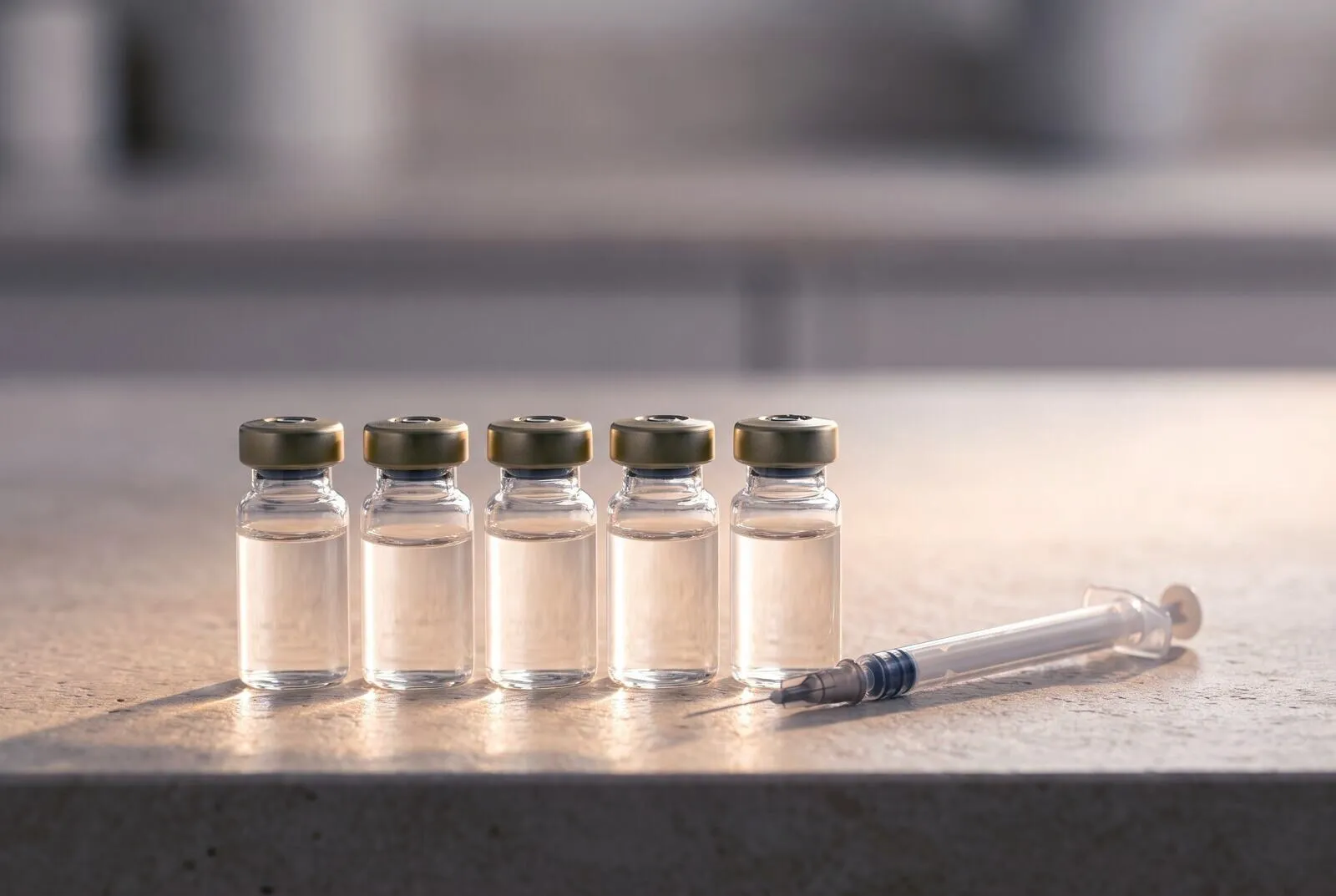
The peptides are given as small subcutaneous injections, most commonly in the abdominal area, which you do yourself at home once she has shown you how.
Follow-up and adjustment
The first review comes at two to four weeks, with further reviews across the first three months and a check every few months after that. Dr. Mikki monitors your response and adjusts the protocol rather than leaving it fixed.
Safety and possible side effects
What is known about safety
- The protocol prompts your body’s own growth-hormone production rather than introducing hormone from outside, so the release stays closer to your own physiology.
- Neither CJC-1295 nor Ipamorelin significantly affects cortisol or prolactin levels.
- Reported use has generally been well tolerated when a physician prescribes and monitors it. Whether it is appropriate for you is a judgement Dr. Mikki makes from your own history and labs.
- Side effects reported with these peptides are usually mild and tend to track the amount given, so Dr. Mikki lowers or pauses the protocol if you are not tolerating it.
Possible side effects
- Injection site reactions.
- Temporary water retention.
- Mild joint discomfort.
- Increased hunger, which comes from the Ipamorelin side of the pairing.
- CJC-1295 is a prescription peptide requiring medical supervision. It is prescribed off-label and compounded to order; it is not an FDA-approved drug.
Who CJC-1295 and Ipamorelin are for
Dr. Mikki confirms candidacy at consultation, against your labs and your history, and she will say when a different peptide fits better. Tesamorelin is the referral when abdominal and visceral fat is the target rather than overall composition. Sermorelin is a shorter GHRH fragment often used first-line. The wider GHRH peptides hub sets the options side by side.
A good fit
- You are in your mid-thirties or older and noticing age-related decline in energy, sleep quality or body composition.
- You train, and you have hit a plateau in recovery or in the results your training produces.
- You have documented growth-hormone deficiency, shown by a low IGF-1 on labs.
- You want to optimize growth hormone naturally rather than take synthetic HGH.
- You are pursuing a proactive anti-aging or wellness plan and are willing to be monitored through it.
Not the right treatment
- You have active cancer, or a recent history of it.
- You are pregnant or breastfeeding.
- You are under 18.
- You have active diabetic retinopathy, or certain pituitary tumors.
- You are in acute critical illness, or you have a known allergy to a component of these peptides.
Three things worth settling before you book
CJC-1295 is a prescription peptide requiring medical supervision, prescribed off-label and compounded to order. It is not an FDA-approved drug, and the baseline labs come before the first injection rather than after it. Cost varies with the protocol; Dr. Mikki gives transparent pricing at consultation and the therapy is HSA or FSA eligible in many cases. And this is a months-long protocol rather than a course: timeline varies by individual and results may vary.
How long CJC-1295 takes to work
Timeline varies by individual and results may vary. These bands describe what patients most commonly report, and Dr. Mikki reads your own progress against your labs at each follow-up rather than waiting for month six to find out.
Weeks 1 to 2
Sleep is usually the first thing patients describe changing, and it changes before anything is visible.
Weeks 2 to 4
Energy and exercise recovery are the next changes commonly reported, with mood often following at around three to four weeks.
Weeks 6 to 8
Where patients respond, early changes in body composition and skin quality tend to appear around this point.
Weeks 8 to 12
The window in which those changes more often become visible rather than only felt.
Months 3 to 6
Dr. Mikki’s own account describes fuller change over four to six months of consistent use. How much of it you see, and when, depends on your baseline and how you respond.
Why patients choose supervised GHRH therapy
These reflect common patient sentiment rather than verbatim quotes, and individual results vary.
I did not want to inject something every single day, and I also did not fully understand the DAC and no-DAC difference. Dr. Mikki walked me through both, explained why the weekly DAC form fit my schedule, and checked my labs first. Results may vary, but I appreciated a plan built around how I actually live.
She picked the form for my routine and adjusted the dose later. Careful, clear, and no overpromising.

Frequently asked questions
What is CJC-1295, and what is Ipamorelin?
CJC-1295 is a GHRH peptide that prompts the body's own growth-hormone release. Ipamorelin is a selective secretagogue that triggers a growth-hormone pulse from a different receptor without significantly affecting cortisol or prolactin. Dr. Mikki prescribes them together as a GHRH protocol under medical supervision, with the CJC-1295 form chosen for your schedule.
What is the difference between CJC-1295 with DAC and without DAC?
The DAC (Drug Affinity Complex) version binds to blood proteins, so it has a long half-life of six to eight days and holds growth-hormone signaling steady on one or two injections a week. The version without DAC has a half-life of about 30 minutes and creates a pulsatile release that mimics the body's natural pattern, so it is given daily, in most of Dr. Mikki's protocols once or twice a day. She most commonly prescribes this version, combined with Ipamorelin.
Which version is right for me, DAC or no DAC?
That is decided at consultation. The DAC form suits patients who want fewer injections and steadier signaling; the no-DAC form suits those who prefer a schedule closer to the body's natural pulsing release. Dr. Mikki matches the form to your goals, your labs, and how you respond.
How are these peptides given, and how often?
Both are given as small subcutaneous injections, most commonly in the abdominal area, which you self-administer at home after Dr. Mikki shows you how. The DAC form is dosed one to two times a week. The no-DAC form combined with Ipamorelin is dosed one to two times daily, typically before bed and optionally after a workout. Dr. Mikki sets your exact dose and schedule at consultation.
When will I notice results, and where do the peptides come from?
These are gradual protocols, and there are no shortcuts. Improved sleep usually comes first, within one to two weeks. Energy and recovery follow over two to four weeks, early body composition change around six to eight weeks, and optimal results generally develop over four to six months of consistent use. Timeline varies by individual and results may vary. Every peptide is pharmaceutical-grade, sourced from licensed compounding pharmacies, and Dr. Mikki, a board-certified MD, sets the protocol and monitors you.
What are the benefits of CJC-1295 and Ipamorelin?
Patients commonly report improved body composition with increased lean muscle and reduced body fat, deeper and more restorative sleep, faster recovery from exercise, enhanced skin quality, improved cognitive function, and increased energy levels. Many describe feeling more youthful overall. Individual results vary, and Dr. Mikki sets expectations against your labs before you begin.
Do I need a prescription, and what does CJC-1295 cost?
Yes. CJC-1295 is a prescription peptide that requires medical supervision, so it starts with a consultation and baseline labs rather than an order form. Cost varies by protocol and is more affordable than synthetic HGH; Dr. Mikki gives transparent pricing at consultation, and the therapy is HSA or FSA eligible in many cases.
Can women use CJC-1295?
Yes. CJC-1295 is highly effective for women, with reported reduction in stubborn fat, improved muscle tone, better bone density, and improved energy and sleep. Individual results vary. Dr. Mikki reviews the same baseline labs and sets the same monitoring schedule regardless of sex.
Am I a candidate for CJC-1295 and Ipamorelin?
Candidacy is decided at consultation. Dr. Mikki reviews your goals, relevant labs, and history before recommending a GHRH protocol, and she will say plainly when these peptides are not the right tool for you. These peptides are not used in patients with active cancer or a recent history of it, in pregnancy or breastfeeding, under 18, with active diabetic retinopathy or certain pituitary tumors, in acute critical illness, or with a known allergy to a peptide component.
Which CJC-1295 form fits your routine?
Dr. Mikki reviews your goals and labs, chooses the DAC or no-DAC form for your schedule, and sets your dose before you begin.
4.8★ from 128 verified Google reviews