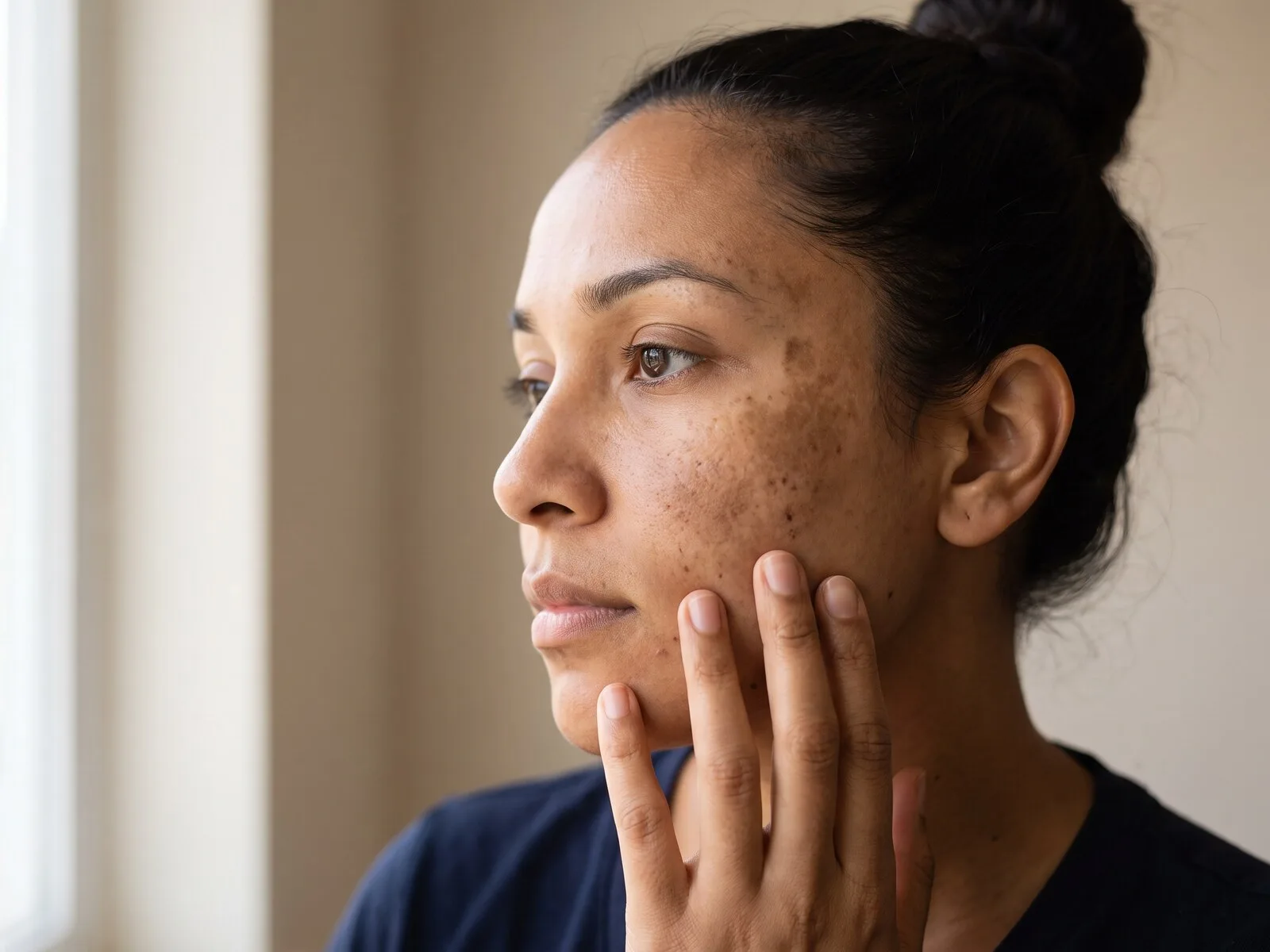
Glow Complex: GHK-Cu for Skin, Hair and Nails in Southlake, TX
The Glow Complex adds GHK-Cu, a copper peptide studied for collagen support, to TB-500 and BPC-157. It is also prescribed on its own, with the concentration set for your skin.
- Google 4.8★
- Yelp 5.0★
The Glow Complex is built on a copper peptide
Glow Complex is Dr. Mikki's name for GHK-Cu added to TB-500 and BPC-157, so skin quality and recovery are treated in one course. GHK-Cu is the copper-binding peptide that defines the blend, it is one the body makes on its own, and it is what the rest of this page covers. She also prescribes it by itself when the goal is the quality of your skin, your hair and your nails. For joint and tissue recovery she uses the repair peptides instead.
What GHK-Cu is used for
How the copper peptide signals collagen and elastin
GHK-Cu was discovered in 1973 by Dr. Loren Pickart and was first used to accelerate wound healing and tissue regeneration. The anti-aging use came later, once its effect on skin density and elasticity was recognised, which is why the mechanism reads as a repair pathway rather than as a cosmetic one.
The skin, hair and nail concerns GHK-Cu is studied for
These are the properties the research on copper peptides describes. They are not a promise about your face. Individual results vary, and Dr. Mikki maps which of them are realistic for your skin at consultation.
Copper peptide skin benefits
Studied for its effect on:
- Skin firmness and elasticity
- Fine lines and wrinkles
- Wound healing and skin barrier function
GHK-Cu for hair thinning
Studied for its effect on:
- Blood circulation to the hair follicles
- Production of hair growth factors
- The growth (anagen) phase of the follicle
- Overall follicle health and function
Dr. Mikki usually folds GHK-Cu into a wider hair restoration plan alongside PRP and PRF therapy and medical-grade hair loss medication, instead of running it alone.
GHK-Cu for nail quality
Studied for its effect on:
- Nail strength and resistance to splitting
- Texture and tone, treated alongside skin and hair
Nails are the quietest of the three and the least studied. Dr. Mikki treats them as part of a wider skin plan and tells you at consultation what is realistic for yours.
How GHK-Cu is delivered: four routes, topical to injectable
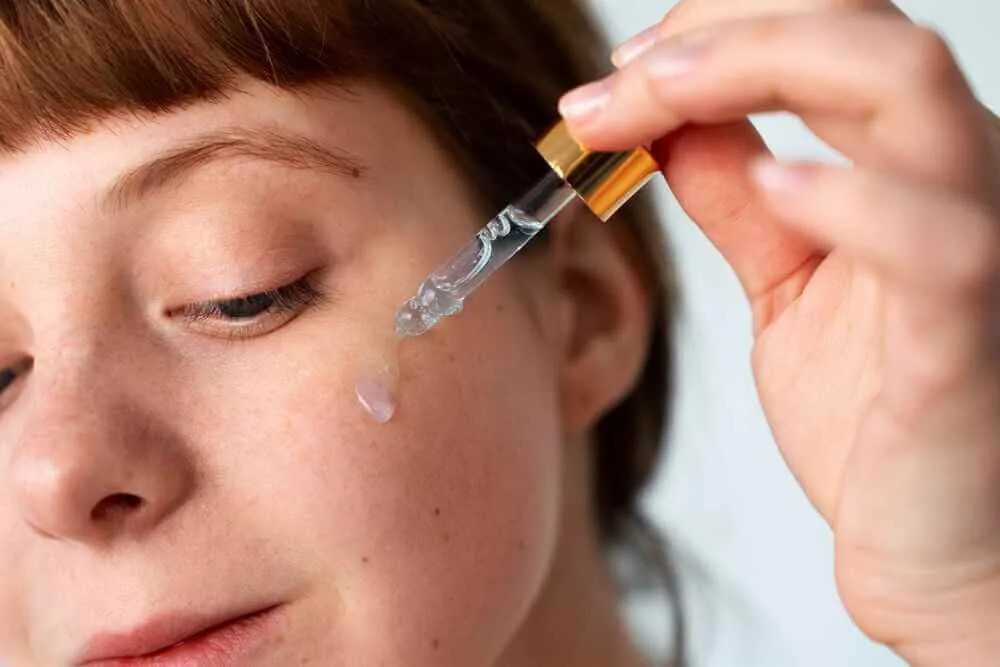
Topical and injectable are not interchangeable, and choosing between them is the first real decision on this treatment. A topical works on the area you apply it to. A subcutaneous injection provides systemic regenerative support. Two further routes combine the peptide with a procedure, and Dr. Mikki recommends between the four at consultation.
A supervised protocol, not a shelf serum
Drugstore copper serums use low, unlabeled amounts and no medical review. A compounded GHK-Cu plan uses a known concentration from a reputable pharmacy, chosen by Dr. Mikki for your skin. When a blend fits better, she may recommend the KLOW blend instead.
| Feature | Medrein GHK-Cu | OTC Copper Serum |
|---|---|---|
| Known, labeled concentration | Included | Not included |
| Sourced from reputable compounding pharmacies | Included | Not included |
| A board-certified MD sets the form and plan | Included | Not included |
| Skin and history reviewed before you start | Included | Varies |
What a GHK-Cu protocol looks like
Consultation with Dr. Mikki
She reviews your skin, hair and nail concerns alongside your medical history, and says plainly whether a copper peptide is the right tool for the goal you came in with.
The route and concentration are set
Dr. Mikki matches the delivery route to the goal you came in with, and sets the concentration with it. There is no shelf dose you choose yourself.
Scheduled around your other treatments
GHK-Cu is often planned around microneedling with PRP/PRF, a chemical peel or laser resurfacing, where it supports healing and collagen production alongside the procedure.
Monitoring and adjustment
Dosage and delivery are adjusted as your complexion changes. Skin remodeling is gradual and individual results vary, so the plan is reviewed at follow-up rather than set once and left.
Safety, purity and what to watch for
Why physician-led GHK-Cu is different
- GHK-Cu occurs naturally in human plasma, saliva and urine, so supplementing it works through a pathway your body already uses.
- Medical-grade GHK-Cu is compounded to a known purity and concentration, not an unlabeled retail amount.
- Dr. Mikki, a board-certified physician, calibrates the concentration and the delivery route to your skin.
- Your skin, your hair and your medical history are reviewed before anything is prescribed.
- Alongside its repair signaling, GHK-Cu is studied for antioxidant and anti-inflammatory effects.
What to know before you start
- The “copper uglies” (a temporary loss of skin elasticity or texture) are reported with low-quality formulations and improper dosing rather than with the peptide itself.
- Unregulated “research peptides” sold online carry no testing or purity standards, so there is no way to know what is in the vial.
- Sensitive or rosacea-prone skin is worth raising at consultation before a copper peptide is prescribed.
- This is a remodel, not a same-week fix. The structural change is measured in months and individual results vary.
- GHK-Cu is prescribed off-label and compounded to order; it is not an FDA-approved drug, and Dr. Mikki explains what that means before you start.
Who GHK-Cu is for
Dr. Mikki confirms candidacy at consultation, and will say when something else fits better: the Wolverine Stack when the goal is joint and soft-tissue recovery, microneedling with PRP when the skin needs a procedure rather than a peptide, or the wider peptide therapy menu when the concern is not your skin at all.
A good fit
- Thinning skin and slower recovery are what you are noticing, and you want the underlying repair signaling addressed rather than covered.
- Loss of firmness, loss of elasticity or a dull, uneven tone are your main skin complaints.
- You have hyperpigmentation or age spots you want managed alongside your other treatments.
- You are thinning at the hairline and want follicle support running alongside PRP/PRF or medical-grade hair loss medication.
- You have microneedling, a chemical peel or laser resurfacing booked and want to support healing and collagen production around it.
Not the right treatment
- Your concern is joint, tendon or soft-tissue recovery rather than skin quality, which is what the repair pairing is for.
- You want one overnight change. Copper peptide remodeling is gradual and results may vary.
- You would rather buy an unregulated research peptide online than be prescribed and monitored by a physician.
- What your face actually needs is volume or a structural lift rather than better skin quality, and a different treatment answers that.
Three things worth settling before you start
GHK-Cu is not an FDA-approved drug. Dr. Mikki prescribes it off-label and it is compounded to order by a licensed pharmacy, which is the whole difference between a supervised protocol and a vial bought online. Purity matters more than strength. The problems people report with copper peptides trace back to low-quality formulations and improper dosing. And this is a remodel measured in months rather than days, so results may vary and the timeline is set against your skin at consultation.
How long GHK-Cu takes to show in the skin
Skin remodeling is gradual and there are no shortcuts. These are the bands to plan around. Individual results vary with skin type, age and routine, and Dr. Mikki sets a realistic timeline against your skin before you begin.
Within 14 days
Refined surface texture and reduced redness. This is the first change most people register, and it is a surface change rather than a structural one.
The second month
Improved resilience and a more even tone, as cellular turnover and microcirculation pick up.
Around three months
Collagen and elastin remodeling becomes visible: increased skin density and a reduction in fine lines. This is the band the structural work lands in.
Other Repair & Healing peptides
Why patients choose a copper peptide protocol
These reflect common patient sentiment rather than verbatim quotes, and individual results vary.
My skin had lost its bounce and my nails kept splitting, and I wanted something more than another serum. Dr. Mikki explained what a copper peptide does and set a realistic timeline instead of promising overnight change. Results may vary, but I liked that she treated it like medicine, not a shelf product.
She chose the concentration and the form for my skin. No guesswork, no upsell to five other things.

Frequently asked questions
What is GHK-Cu?
GHK-Cu is a copper peptide, a short chain of three amino acids bound to copper. It occurs naturally in the body, and its levels decline with age. It is studied for its role in skin remodeling, wound repair, and collagen support, and Dr. Mikki prescribes it when the goal is skin, hair, or nail quality.
What does GHK-Cu do for the skin?
GHK-Cu is studied for supporting collagen and elastin production, skin firmness, and an even tone. Because it targets skin quality rather than tissue and joint recovery, it sits in a different lane than the repair-focused peptides on this hub.
How is GHK-Cu given, topically or by injection?
Both, depending on the goal. A compounded topical is applied to the area being treated and works at the surface. A subcutaneous injection provides systemic regenerative support. GHK-Cu can also be driven deeper by combining it with microneedling, or placed into a specific area using mesotherapy technique. Dr. Mikki recommends the route at consultation, based on the goal you came in with.
Is GHK-Cu different from an over-the-counter copper serum?
Retail copper serums use low, unverified concentrations and no medical oversight. A compounded GHK-Cu protocol uses a known concentration sourced from a reputable pharmacy, with a board-certified MD setting the plan. That is the difference between a cosmetic ingredient and a supervised protocol.
When will I see results from GHK-Cu?
Skin remodeling is gradual and there are no shortcuts. Refined surface texture and reduced redness are usually the first change, within about 14 days. Improved resilience and a more even tone follow in the second month. Collagen and elastin remodeling becomes visible around three months, with increased skin density and reduced fine lines. Results may vary with your skin type, age, and routine, and Dr. Mikki sets a realistic timeline before you start.
Can GHK-Cu help with hair loss?
Yes. GHK-Cu supports hair follicle health by increasing blood flow to the follicles, stimulating hair growth factors, and extending the growth phase of the hair. Dr. Mikki usually adds it to a hair restoration protocol alongside PRP/PRF therapy and medical-grade hair loss medication rather than using it on its own. Individual results vary.
Can I combine GHK-Cu with microneedling, peels, or laser?
Yes. GHK-Cu pairs with microneedling, PRP/PRF treatments, laser skin resurfacing, and chemical peels. The peptide supports healing and collagen production, which is why Dr. Mikki often schedules it around those procedures rather than in isolation. Results from any combination may vary.
What are the “copper uglies”, and how do I avoid them?
The copper uglies describe a temporary loss of skin elasticity or texture that people report after using copper peptides. It traces back to low-quality formulations and improper dosing rather than to the peptide itself. Physician-led therapy is the way around it: medical-grade purity, a known concentration, and a delivery route calibrated by Dr. Mikki instead of guessed at.
Am I a candidate for GHK-Cu?
Candidacy is decided at consultation. Dr. Mikki reviews your skin, hair, and nail concerns along with your history, and she will recommend GHK-Cu only when it fits your goals.
Is GHK-Cu right for your skin?
Dr. Mikki reviews your skin, hair, and nail goals, chooses the form and concentration, and confirms candidacy before you begin.
4.8★ from 128 verified Google reviews