PRP Hair Restoration for Early Thinning in Southlake, TX
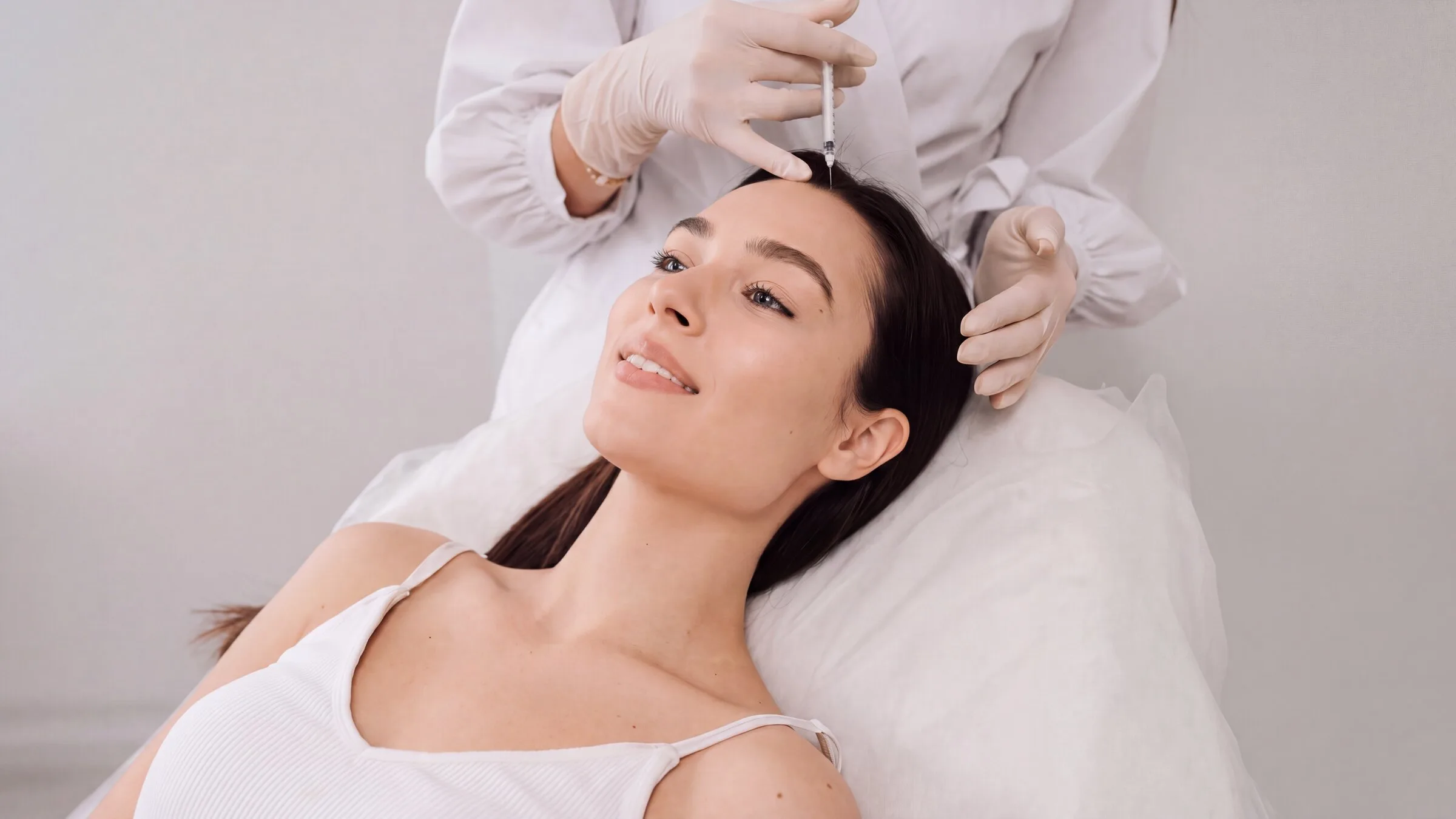
PRP and PRF use your own platelets to support hair follicles that are thinning but still active. Your blood is drawn, concentrated, and returned to the scalp in a single visit.
- Google 4.8★
- Yelp 5.0★
Platelet therapy that uses your own blood
PRP and PRF concentrate the platelets from a small blood draw and return them to the scalp, where their growth factors support follicles that are miniaturizing but still alive. It is one of three modalities on the Hair Restoration plan, chosen when your follicles still have activity to build on. Dr. Mikki confirms candidacy after examining your scalp and pattern.
What PRP and PRF do at the scalp
PRP and PRF are not the same preparation
The difference in one line: PRP is a liquid and PRF is a gel.
PRP stands for platelet-rich plasma and PRF for platelet-rich fibrin. Both are made the same way, from a small draw of your own blood spun in a centrifuge until the platelets separate out, and both end up back in your scalp. What changes is how the blood is handled in between, and that changes how much arrives at the follicle and how long it keeps working. If a term below is unfamiliar, the line under it says what it means.
| What is being compared | PRP | PRF (the more advanced option) |
|---|---|---|
| Blood draw How much blood is taken from your arm at the start. | PRP:Both start with a draw. PRP needs the larger of the two, because more blood is needed to end up with enough usable liquid. | PRF:Needs less blood for the same session, so the draw is smaller. |
| Additives in the tube Whether anything is mixed into your blood before it goes back in. | PRP:The collection tube holds an anticoagulant, a clot-blocking additive. It keeps the blood liquid, and it travels into your scalp along with the platelets. | PRF:Nothing is added to the tube at all. That makes PRF the purer of the two preparations, and it is why it is able to set into a gel. |
| Spin speed How fast the centrifuge separates your blood. | PRP:Spun fast. The speed does the job quickly, but it can damage some of the blood cells on the way. | PRF:Spun slowly and gently, so the cells arrive at your scalp intact. |
| Growth factors The healing signals in your blood that tell a follicle to get to work. | PRP:A lower concentration, because the harder spin costs some of them. | PRF:A high concentration, and the gentler spin is the reason. |
| How long it keeps working How long the growth factors stay active after the appointment. | PRP:Released quickly, over roughly 72 hours, and then it is done. | PRF:Released slowly, across about ten days, so the follicle is fed for longer after one visit. |
| What else is in it Everything in the mix besides platelets. | PRP:Platelets and plasma. | PRF:Platelets and plasma plus stem cells, white blood cells and fibrin. The fibrin is the part that gels: it acts as scaffolding and holds everything at the treated area instead of letting it drift away. |
| How it reaches the follicle What actually happens to your scalp in the chair. | PRP:Injected into the scalp in a grid of small shallow injections. | PRF:Injected the same way, or worked in through microneedling, which uses a pen of very fine needles to open micro-channels and drive the gel in. Dr. Mikki picks the route at your consultation. |
| Which one Medrein reaches for The short answer, if you only read one row. | PRP:Still used, and still a sound treatment, especially where it suits the scalp in front of her. | PRF:The preparation Dr. Mikki prefers for hair, because it is purer and it keeps working for longer. |
PRF is the more advanced of the two preparations. Dr. Mikki still confirms which one fits your scalp at consultation, because the better preparation on paper is not automatically the better plan for your pattern.
What a PRF hair restoration session looks like
The whole appointment takes about thirty minutes, and a topical numbing cream can be applied to the scalp first to keep it comfortable. What the treatment is doing across those thirty minutes is rebuilding weak follicles by improving the blood supply reaching them. Nothing synthetic is added at any point.
The blood draw
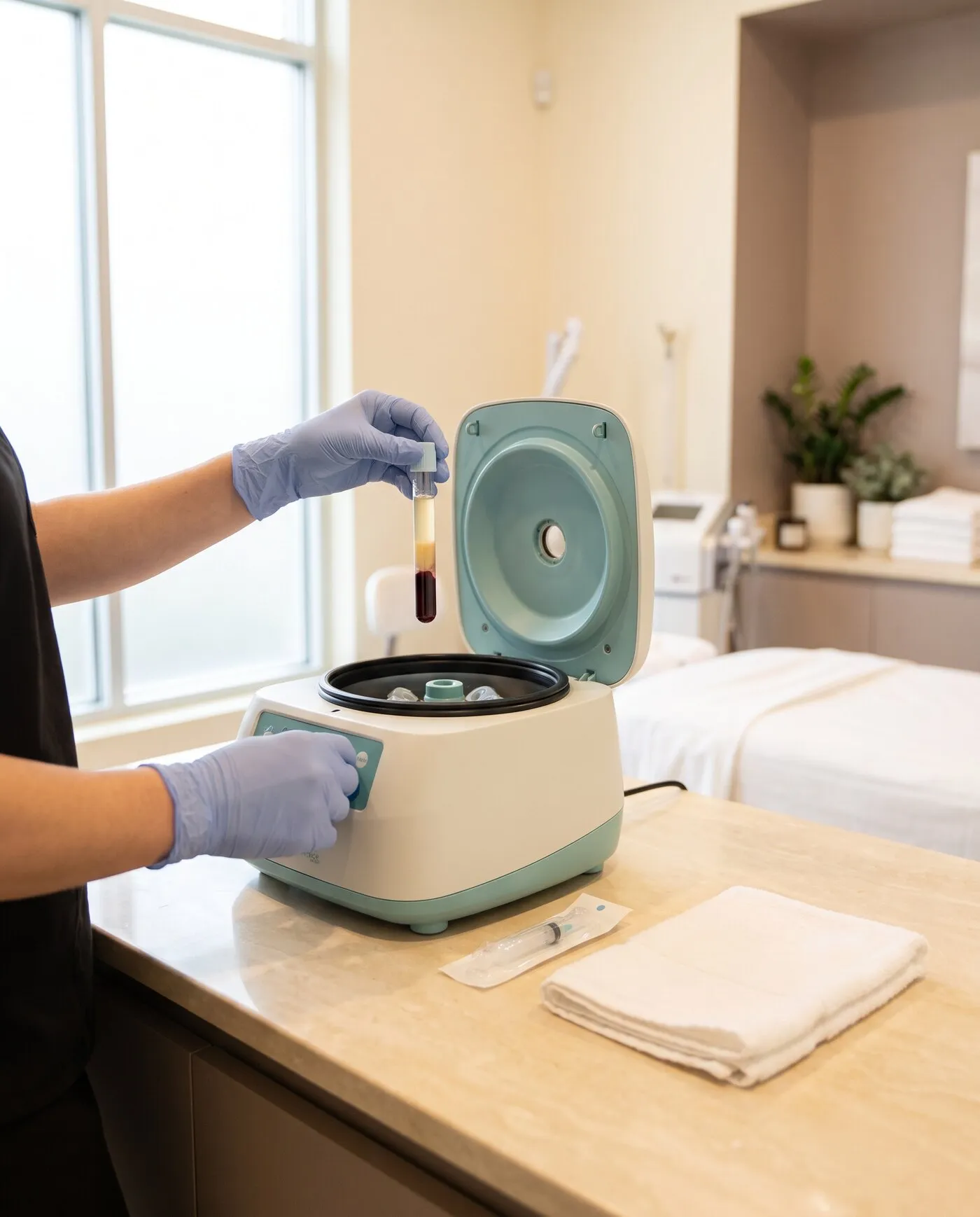
A small amount of blood is drawn, usually from your arm, and placed in a centrifuge. Nothing synthetic is added at any point.
The spin
After roughly ten minutes the blood has separated into three layers: platelet-poor plasma, platelet-rich fibrin, and red blood cells.
The injection
The platelet-rich fibrin layer is drawn into a syringe and injected into the regions of the scalp where hair growth is needed. The session itself takes about thirty minutes.
What is actually in the gel
PRF is not a drug and it is not a serum. It is four things your own blood already carries, concentrated into one small volume and placed where the thinning is. This is why the treatment works on follicles that are still alive, and why it cannot do anything for a follicle that is gone.
Which kinds of hair loss respond to platelet therapy
Platelets support follicles that are still alive, so the honest answer depends on why your hair is thinning. Dr. Mikki examines the pattern and, where a hormone is driving it, addresses that first through hormone therapy before starting a series.
Responds best
- Thinning that comes with aging.
- Hereditary thinning, where follicles are miniaturizing but still active.
- After a hair transplant, to support the grafts you already have.
Needs something else first
- Hormonal imbalance. This is treated first, because platelets cannot outrun a hormone driving the loss.
- Autoimmune hair loss, assessed individually. PRF is not started until twelve months after cancer treatment.
- Scalp that has been fully bald for years, where there are no follicles left to support.
If you have had a hair transplant
PRF works alongside surgical hair restoration and does not replace it. Where a transplant is part of your history or your plan, it is used to:
- Reduces scalp sensitivity before and during the postoperative phase.
- Promotes and accelerates adherence of the transplanted grafts.
- Reduces postoperative redness.
- Heals scalp wounds more quickly.
- Accelerates tissue regeneration.
Where platelet injections fit
A surgical transplant moves follicles you already have, and a daily medication works from home each day. PRP and PRF sit between them: an in-office treatment that supports the follicles still on your scalp. Dr. Mikki often pairs it with HaiRestart laser stimulation for patients who want a needle-free step in the same plan.
| Feature | PRP / PRF (Medrein) | Hair Transplant Surgery | Daily Medication Alone |
|---|---|---|---|
| No surgery or general anesthesia | Included | Not included | Included |
| Uses your own platelets, nothing synthetic | Included | Not included | Not included |
| Minimal downtime after each visit | Included | Not included | Included |
| Supports the follicles you still have | Included | Varies | Included |
The first 48 hours, and when results show
What to expect
- Pinpoint bleeding at the injection sites.
- Sensitivity across the treated scalp.
- Itching.
- Peeling of dry skin in the first 48 hours.
- Twenty-four to forty-eight hours of downtime.
- At-home aftercare, which for most plans means micro-channeling and a hair growth solution between visits.
What to avoid
- Topical scalp products for the period Dr. Mikki specifies.
- Heat on the scalp, including hot styling.
- Direct sun on the treated area.
- NSAIDs such as ibuprofen and aspirin. This one runs the other way: stop them for three days BEFORE your session.
Who PRP and PRF are for
Dr. Mikki examines your scalp before recommending a series, and she will say plainly when something else fits better: laser stimulation if you would prefer to avoid needles, or hair loss medication as the daily foundation a series is built on.
A good fit
- Early to moderate thinning, where follicles are miniaturizing but still active.
- Androgenetic thinning at the crown or the part line.
- Wanting a treatment drawn from your own blood, with nothing synthetic added to it.
- Willing to run a series and then keep it up, because platelet therapy is ongoing maintenance.
Not the right treatment
- Scalp that has been smooth and bald for years, where there are no follicles left to support.
- An untreated hormonal imbalance driving the loss, which is addressed first.
- Within twelve months of cancer treatment, where PRF is deferred.
- Wanting a one-time fix, because genetic thinning continues without maintenance.
Before you book, three things worth knowing
Stop NSAIDs such as ibuprofen and aspirin three days before your session, and arrive with a clean scalp and clean hair. Treatment typically ranges between $750 and $900 depending on several factors, so ask for a written quote at consultation. And this is maintenance, not a cure: results last on average eighteen months to two years, results may vary, and thinning resumes without upkeep.
What makes Medrein the choice for platelet therapy
The practice is equipped for platelet therapy end to end, from the draw through the spin to the injection, and Dr. Mikki performs the treatment herself. Depending on your scalp condition she designs an individualized plan, and she is candid at consultation about what it can and cannot do for your pattern.
Why patients choose platelet therapy first
These reflect common patient sentiment and are not verbatim quotes. Individual results vary.
My part line had been widening for a couple of years and I wanted to try something before considering surgery. What I appreciated was that Dr. Mikki drew and injected the PRP herself and told me plainly it would help thinning follicles, not bring back the areas that were already bare. Results may vary, but the shedding slowed and I knew exactly what I was paying for.
A physician actually explained why my follicles were still worth treating before we started a series.

Frequently asked questions
What is the difference between PRP and PRF for hair?
The short version: PRP is a liquid and PRF is a gel. Both are made from a small draw of your own blood, spun in a centrifuge to concentrate the platelets. PRP stays liquid, is made with a clot-blocking additive in the tube, and releases its growth factors within about three days. PRF is spun gently with nothing added, so it sets into a soft fibrin gel that stays at the treated area and keeps releasing growth factors for about ten days. PRF is the preparation Dr. Mikki prefers for hair, and she confirms which one fits your scalp at your consultation.
Who is a good candidate for PRP/PRF hair restoration?
PRP and PRF work best on early to moderate thinning, where follicles are miniaturizing but still active. That includes androgenetic thinning at the crown or part line and some cases of telogen shedding. Areas that have been smooth and bald for years no longer have follicles to support, so they are not candidates. Dr. Mikki examines your scalp and pattern before recommending it.
Does the scalp injection hurt?
Most patients describe brief stinging as the platelet concentrate is injected. The scalp can be numbed with topical anesthetic or cooling first, and each visit is short. Comfort options are reviewed before you begin. Results may vary between patients.
How many sessions will I need and when do results show?
Most plans begin with three to four sessions spaced about a month apart, then move to maintenance visits a few times a year. Follicle changes build slowly, so patients typically look for reduced shedding first and gradual thickening over three to six months. Results may vary, and Dr. Mikki sets a realistic timeline for your case.
Can PRP/PRF be combined with other hair treatments?
Yes. Dr. Mikki often pairs platelet injections with a daily prescription or with laser stimulation, because the three work through different mechanisms. The plan depends on your pattern, your goals, and how your follicles respond. She confirms the combination at consultation, and she does not apply one protocol to everyone.
Is PRP/PRF a permanent fix for hair loss?
No treatment stops the underlying cause of genetic hair loss, so PRP and PRF are maintenance treatments and not a one-time cure. Ongoing thinning continues without upkeep, which is why plans include maintenance sessions. Dr. Mikki is direct at consultation about what platelet therapy can and cannot do for your pattern.
How must you prepare for PRP and PRF hair restoration treatment?
Avoid NSAID medicines such as ibuprofen and aspirin for three days before your treatment, and arrive with a clean scalp and clean hair. Tell Dr. Mikki about every medication and supplement you take at your consultation, because a few of them change the plan.
How long do PRP and PRF hair restoration results last?
Results may vary, but on average they last between eighteen months and two years. The full result of a series is usually visible around three to four months after treatment, because follicle changes build slowly and do not appear all at once. Maintenance sessions are what hold the result beyond that.
How much does PRP and PRF hair restoration cost?
Hair restoration treatment typically ranges between $750 and $900, depending on several factors including the size of the area treated and how many sessions your plan runs to. Ask for a written quote at your consultation, since the plan is built around your own pattern and a published range cannot be.
Is it injected, or microneedled into the scalp?
Either, and sometimes both in the same plan. The platelet concentrate can be injected into the scalp in a grid of small shallow injections, or worked in through microneedling, which uses a pen of very fine needles to open micro-channels in the scalp and drive the gel down into them. Microneedling on its own also triggers collagen production and follicle activity, so the two work together. Dr. Mikki chooses the route at your consultation based on your scalp and where the thinning sits.
Which is better, PRP or PRF?
For hair, PRF is generally the stronger of the two. Nothing is added to the collection tube, the gentler spin leaves more growth factors intact, and the fibrin gel keeps releasing them for about ten days instead of three. That said, PRP is still a sound treatment, and the better preparation on paper is not automatically the better plan for a given scalp. Dr. Mikki examines your pattern and tells you which one she is recommending and why.
What are the side effects afterward?
Expect pinpoint bleeding where the needles went in, some tenderness and itching across the treated scalp, and peeling of dry skin in the first 48 hours. Most patients also notice dryness and mild discomfort of the scalp, which settles on its own. Plan for twenty-four to forty-eight hours of downtime, and keep topical scalp products, heat styling and direct sun off the area for the period Dr. Mikki specifies. Call the clinic if anything worsens instead of settling.
Can it be combined with other hair restoration treatments?
Yes, and it usually is. Platelet therapy is regularly paired with hair loss medications such as minoxidil and finasteride, with low-level laser therapy on the HaiRestart platform, and with in-office scalp treatments, because each one works through a different mechanism. Dr. Mikki builds the combination around your pattern at consultation.
Are your follicles right for PRP or PRF?
Dr. Mikki examines your scalp, confirms candidacy against the alternatives, and sets your session count.
4.8★ from 128 verified Google reviews